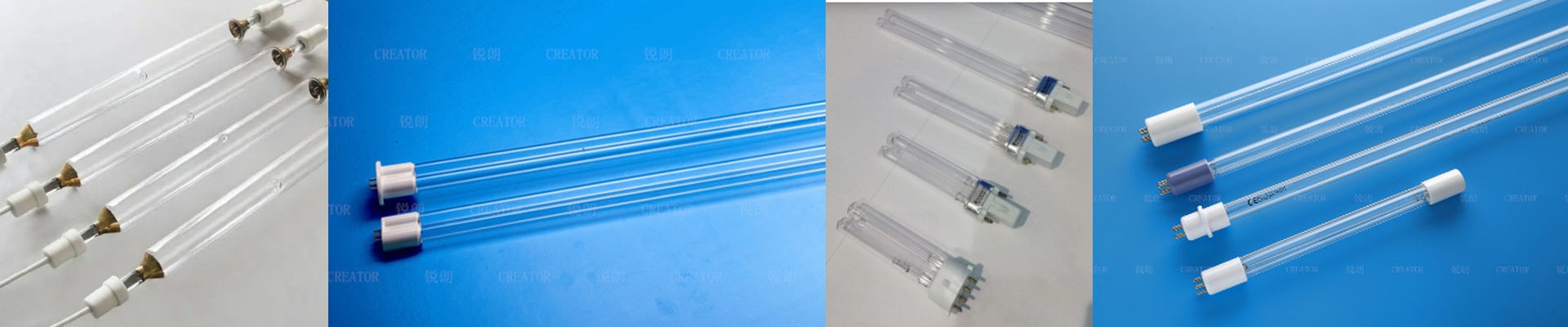
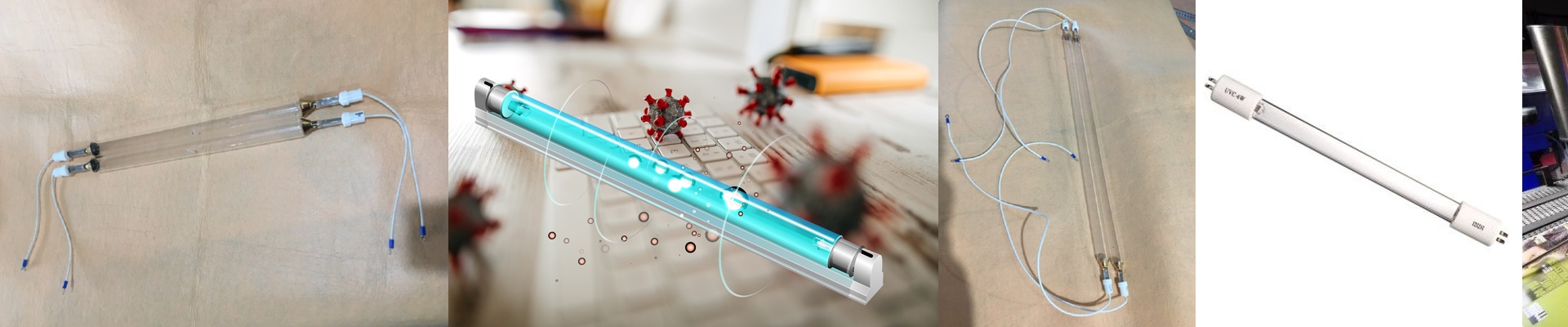
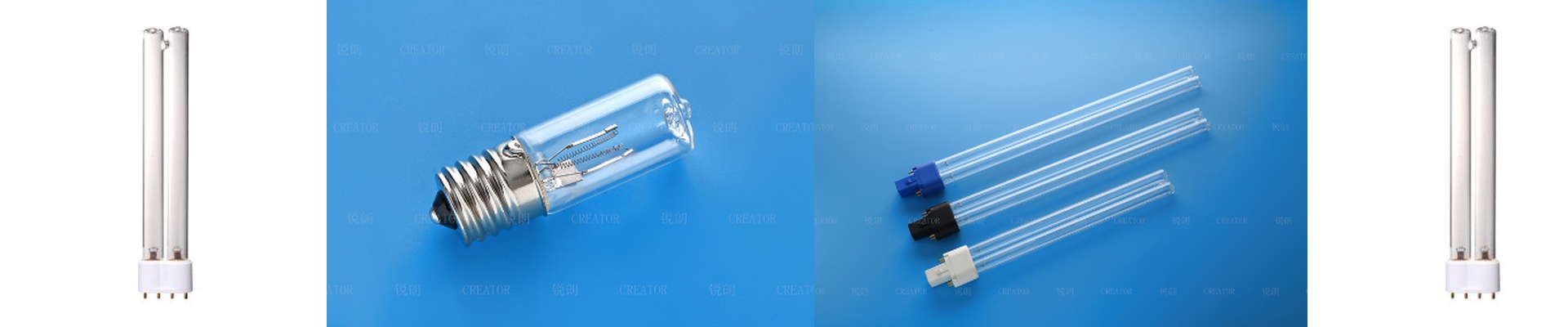
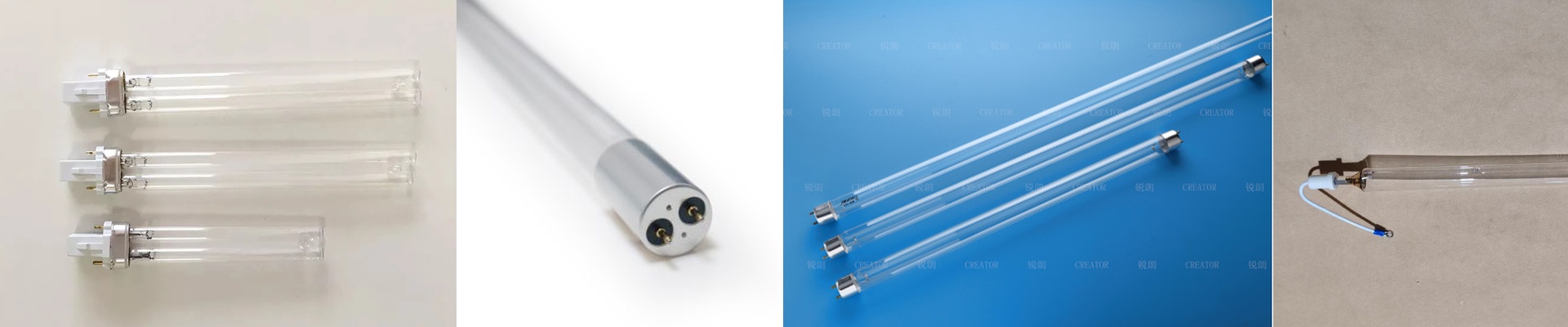
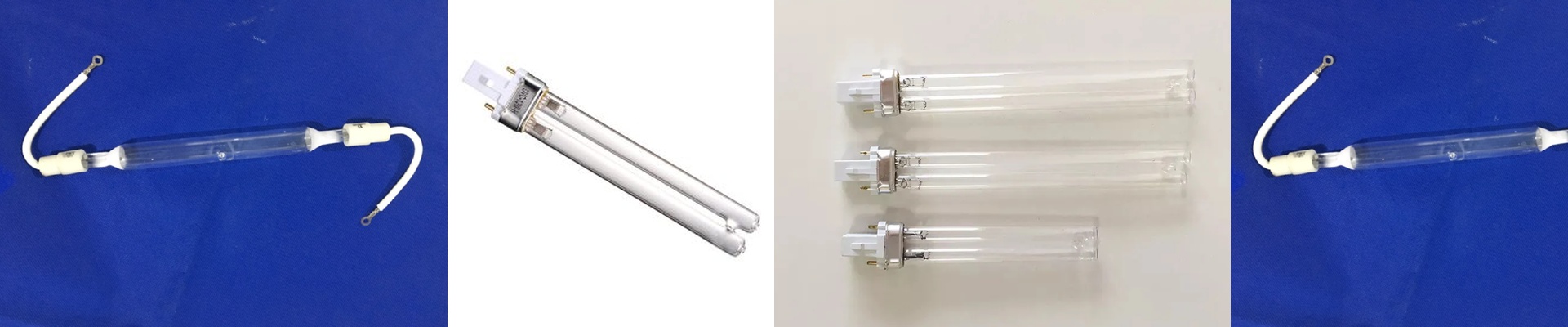
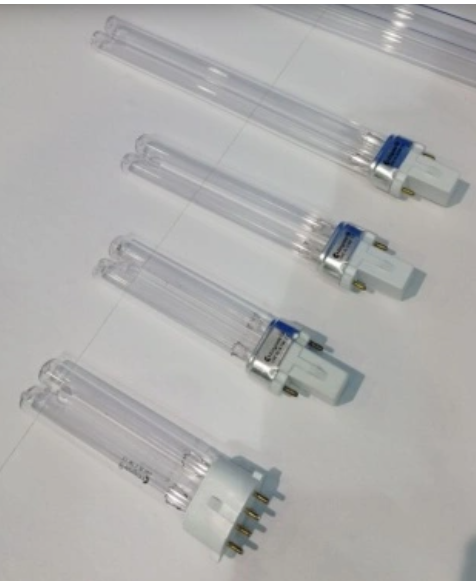
On the floor, the substrate doesn’t care about your good intentions. Anodized aluminum. Tempered glass. A coating that basically tells ink to back off. The press is running, and the finish has to be right the first time—no sanding, no buffing, no rework. If the UV lamp can’t throw enough photons at the ink to drive cross-linking all the way down to the interface, the stack will fail. Sometimes it shows up in the scratch test. Sometimes it shows up later, when thermal cycling and moisture find the weak spot. So we talk in measurable output, not marketing. It doesn’t matter if the lamp “looks right.” What matters is whether it delivers stable, repeatable energy at the wavelength that actually does the work—especially when you’re running high-pigment, low-migration formulations on materials that don’t play nice.
What Actually Matters: Spectral Output, Irradiance, and Energy on the Substrate
In industrial UV curing, adhesion comes down to chemistry and photon delivery. The photoinitiators in the ink need enough photons at the right wavelength to kick off cross-linking before oxygen inhibition and shrinkage stress create weak boundary layers. With mercury-based UV systems, the dominant output line is centered at 365 nm, with additional energy in the short-wavelength UVC region and longer near-UV lines. On metal and glass jobs, 365 nm is the workhorse. It penetrates better than shorter wavelengths, and it drives curing through pigmented layers more consistently than relying on longer wavelengths alone. Out in the field, these are the specs we verify and hold to:
- Peak wavelength (dominant line): 365 nm. This lines up with common photoinitiator absorption and gives you the right balance of surface cure and through-cure.
- Power density at the substrate plane: 12–20 W/cm², depending on lamp length, arc gap, and reflector geometry. This is what actually reaches the ink, not the electrical input to the lamp.
- Peak irradiance: ≥ 10 W/cm² at 365 nm. High peak irradiance cuts down oxygen inhibition and speeds surface polymerization—critical on low-porosity substrates.
- Delivered energy density (dose): 800–1,500 mJ/cm², measured with a calibrated radiometer at the substrate plane. That total energy is what pushes the reaction far enough to survive cross-hatch adhesion testing.
- Spectral stability: ≤ 3% output drift over the first 1,000 hours, measured at 365 nm with a fixed radiometer setup. Stability is what keeps cure repeatable job to job, shift to shift.
- Warm-up time: ≤ 3 minutes to reach 95% of rated irradiance. Press time is expensive. Lamps that drift for ten minutes burn money. We build these lamps around high-pressure mercury vapor discharge in a quartz envelope, paired with reflectors that use dichroic coatings to reflect UV while letting heat pass away from the substrate. The point is simple: more usable UV energy into the ink, less convective heat into the sheet or web. And for the question that always comes up—“Why is my UV germicidal lamp blue?”—the blue you see is mainly 435–450 nm from the mercury spectrum. Germicidal lamps are optimized for 254 nm, but the visible blue is just part of the discharge. In industrial curing, we don’t optimize for germicidal output. We optimize for 365 nm output and total dose delivered to the ink layer.
Why This Works on Metal and Glass: High Intensity Where Adhesion Lives
Metal and glass aren’t just tough to print on—they’re tough to bond to. The ink sits on a surface that doesn’t absorb energy the way paper does, and there are no pores to wick into for mechanical anchoring. Adhesion depends on clean interfacial polymerization and keeping residual stress low. High irradiance attacks the physics directly. When peak irradiance is high, the photoinitiator population gets excited fast. That narrows the window for oxygen inhibition at the surface—often the first failure point on glass. It also gives you a quicker gel point, which helps lock the ink to the substrate before shrinkage stress builds. When delivered energy density is high enough, the reaction completes through the full layer thickness, even through pigment-rich formulations that eat UV. Under-cured bottom layers can delaminate under flexing or thermal shock, even when the surface feels dry. In production, the lamp has to deliver stable output at line speed. If you’re running 80 m/min, the ink sees the lamp for a short dwell. You can’t make up for low irradiance by slowing the press—throughput falls apart. You make up for it by raising irradiance and making sure the dose at that speed stays above the ink’s threshold. When the system is properly matched to the ink and the press, we see the same story on difficult substrates:
- Cross-hatch adhesion (ASTM D3359) improves once dose clears the ink’s cure window, because the polymer network reaches the cross-link density needed at the interface.
- Pencil hardness and solvent resistance become repeatable when irradiance is stable, because the reaction profile doesn’t drift from run to run.
- Registration stays tight and heat-sensitive substrates survive when reflectors and cooling are set up to control substrate temperature, not just lamp temperature. And here’s the distinction that matters: germicidal output (dominated by 254 nm) is not curing output (dominated by 365 nm). Throwing a germicidal lamp at a curing job is a mismatch—low irradiance where the photoinitiators need it, and a lot of energy wasted as heat and unusable spectral lines.
What You Need to Get Right: Installation, Compatibility, and Real-World Constraints
A high-radiance UV lamp is only as good as the system it sits in. Start with reflector and shutter geometry. Irradiance at the substrate plane depends on distance from the lamp and the reflector focal point. If the reflector is off, you can lose 20–40% of usable UV even with a brand-new lamp. Use a radiometer. Don’t trust your eyes. Then match the lamp to the press interface. Lamp length, arc gap, terminal type, and coolant connections have to line up with the existing curing module. Too many avoidable failures come from mismatched quartz tube dimensions and connector compatibility. Ozone is real. High-output mercury lamps generate ozone at short wavelengths. Use ozone-free or low-ozone quartz envelopes and make sure extraction airflow is adequate. Ozone isn’t a “maybe” problem—it degrades seals, irritates operators, and can corrode equipment. Plan for lamp life and output decay. A high-pressure mercury lamp’s output drops as arc electrodes wear and the quartz degrades. In continuous high-power operation, expect meaningful output reduction after roughly 1,000–1,500 hours, depending on starting power density and cooling. Check with a radiometer every 500 hours and replace based on measured dose, not a calendar. And control the substrate. Condensation on glass, oil residues on metal, and temperature swings change adhesion more than most people want to believe. The lamp can deliver perfect UV. The ink can be spot-on. But if the substrate surface energy is wrong, adhesion will still fail. If you’re printing on metal or glass and adhesion is the gatekeeper, you need a lamp that delivers stable, high irradiance at 365 nm, hits the required energy density at production speed, and stays repeatable over its life. Anything else is guesswork—and guesswork doesn’t hold up when the part leaves the factory and the customer becomes the test lab.